Razer BlackShark V2 Pro (2023) Review: The Wideband Mic Argument
The 2023 BlackShark V2 Pro is one generation behind Razer's current line and still on sale — which makes it the interesting one to read on specs.
By Sofia Marques · November 14, 2026 · Updated November 15, 2026
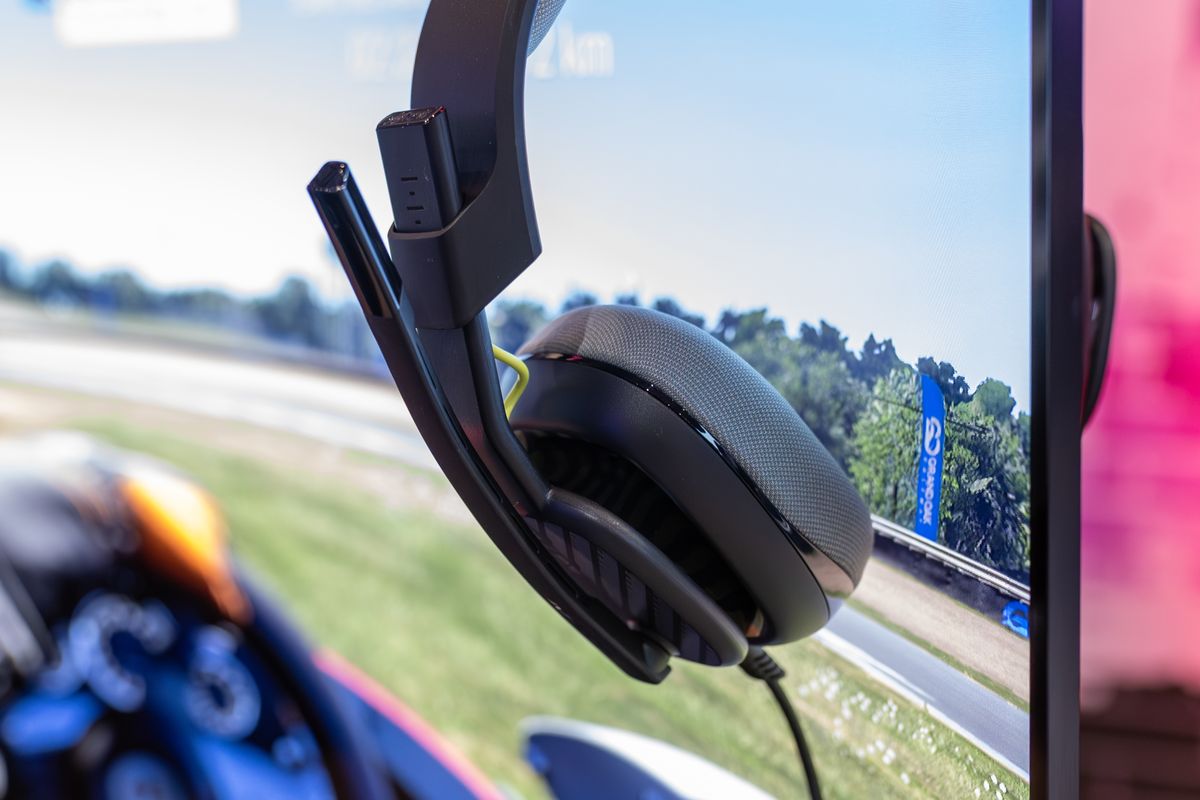
The BlackShark V2 Pro (2023) occupies a strange shelf position for a review: superseded, discounted, and still on Razer’s own store at $199.99 while the V3 line sells above and below it. That position is exactly why it is worth reading on specifications now. Hardware does not expire, and the 2023 edition carries the feature set that made the BlackShark line the default esports headset recommendation — titanium-coated 50mm drivers, a removable wideband microphone, dual wireless, and a battery claim that embarrasses the category. Reading the official numbers against what independent reviewers and owners report says the generation gap costs less than the price gap suggests, with one genuine exception.
Reading the spec sheet
Razer’s published figures for the BlackShark V2 Pro start with 50mm TriForce Titanium drivers — a three-part driver design that tunes highs, mids, and lows on separate diaphragm sections, with titanium coating for stiffness. The headset is specified from 12Hz to 28kHz at 32 ohms impedance and 100 dB SPL per milliwatt, measured on a head-and-torso simulator. Those three numbers describe an easy-to-drive load: at 32 ohms, every source in your setup — dongle, Bluetooth codec, controller jack — has voltage to spare, and the headset will sound consistent across all of them. That is a deliberate design choice for an esports product that travels between venue machines, and it separates the BlackShark from audiophile-flavored headsets that need amplification to perform.
The weight figure is 320 grams, with memory foam cushions wrapped in a breathable FlowKnit weave under a steel-reinforced headband. Against the category, 320 grams is mid-pack — lighter than many wireless competitors with smaller batteries, heavier than the plastic-framed budget tier. The cushion design, not the weight, is what owner feedback concentrates on: the FlowKnit material runs cooler than the leatherette that dominates the price class, which matters at hour three of a session more than any gram count does.
The wideband microphone is the argument
Every wireless headset claims a good microphone; the BlackShark V2 Pro is the product that made the claim technically inspectable. The detachable HyperClear Super Wideband mic is specified at 100Hz to 10kHz frequency response with a signal-to-noise ratio of at least 60 dB and sensitivity of -42 dBV/Pa, unidirectional pickup. The specification matters because most gaming headset microphones cut off well below that bandwidth, capturing a compressed band of voice rather than the range a human voice actually occupies. Razer’s positioning is that the wider band transmits voice with far less of the muffled compression that defines headset comms, and GearLab’s review of the 2023 edition goes further, characterizing the capsule as sampling at 32kHz — broadcast territory that puts it against desk microphones rather than against boom mics on rival headsets.
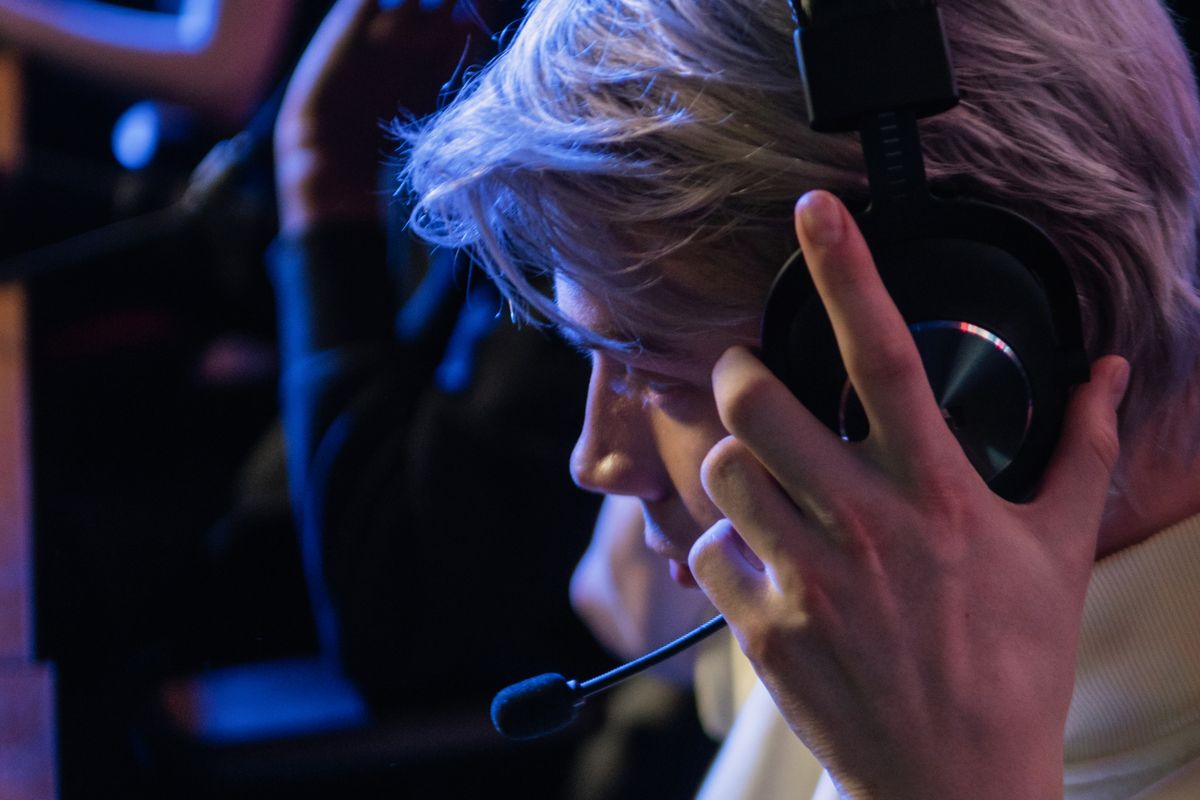
Independent and community reception align on the same conclusion from different directions. Reviewers have consistently rated the microphone as the best-in-class wireless boom, and the community pattern is the one that actually decides purchases: teammates asking whether you bought a new mic. The pickup is unidirectional, favoring voice from your mouth’s direction and attenuating keyboard clatter off-axis, and the capsule detaches cleanly when the headset doubles as travel headphones. If microphone clarity is the deciding factor in your purchase, our headset mic quality guide explains why boom designs like this one still outrank most built-in alternatives — and why the bandwidth figure, not the marketing, is the line to read.
The 70-hour battery claim and its fine print
Razer rates the battery at up to 70 hours over the 2.4GHz connection on PC, with 6 hours of play from a 15-minute charge through USB-C. The fine print is worth reading: the console versions of the same headset are rated at up to 48 hours, and the figure assumes the dongle connection rather than Bluetooth. Even discounted to the console rating, 48 hours is multiple weeks of ordinary evenings, and the fast-charge floor means a forgotten charge is recoverable before a match starts.
The claim’s credibility rests on what the headset is not doing. There is no RGB lighting to power, no active noise cancellation drawing current, and no Bluetooth-to-dongle dual streaming — the BlackShark spends its battery almost entirely on audio and radio. That is the engineering trade the product makes: features that drain batteries are excluded by design, and the endurance figure is the receipt. Owners reporting real-world endurance broadly corroborate the claim’s order of magnitude, which is more than can be said for most battery marketing in this category.
Dual wireless, one audio stream
Connectivity is 2.4GHz HyperSpeed over a USB-A dongle plus Bluetooth 5.2, with Razer’s SmartSwitch handling movement between the two. The design deserves precise description, because the marketing phrase “dual wireless” invites a wrong assumption: the headset pairs to a 2.4GHz device and a Bluetooth device simultaneously but plays one stream at a time, toggled with a double-press. It is not a mixer — you cannot layer game audio on the dongle over Discord on Bluetooth. What it actually buys is continuity: a phone connected for music while the PC waits on the dongle, one button press to move between them, no re-pairing ritual. Reviewers who flag the limitation are correct, and Razer’s product design answers a different question than mixing — for pure dual-source audio, the premium tier in this category, such as the SteelSeries Arctis Nova Pro with its hot-swap base station, is the hardware that carries it.
For latency, the dongle connection is the gaming path. The 2.4GHz link is the low-latency route Razer built its HyperSpeed branding on, and Bluetooth carries the codec latency you would expect from any wireless headset in that mode. Our 2.4GHz vs Bluetooth latency guide covers why competitive play belongs on the dongle and what the millisecond difference amounts to on each connection.
On-headset profiles: the esports detail
The quiet feature separating the BlackShark V2 Pro from generic wireless headsets is onboard audio profiles. Razer tunes competitive FPS profiles — endorsed by its contracted esports athletes — and the headset stores them in hardware, switchable from the earcup with no software running. On a venue machine, a laptop at a LAN, or any system where installing Synapse is not an option, the profiles travel with the headset. Synapse remains the customization layer where those profiles can be edited, and where THX Spatial Audio processing lives — a Windows-only feature per Razer’s master guide, which Mac users should price into the decision.
The design logic is coherence with the product’s audience. Tournament players cannot control what software a venue machine runs, so the feature that matters must live in the hardware. For everyone else, the honest description is a convenience with a specific payoff: the EQ and positional tuning you practiced with is the tuning you compete with, and nothing in the chain depends on a driver behaving.
What reviewers and owners criticize
The counterargument list is short but specific. TechRadar’s review flags bass that runs somewhat weak — the corollary of a tuning that prioritizes footsteps and comms clarity over low-end punch, and a real cost for players who want cinematic weight from single-player titles. GearLab notes the wireframe adjustment sliders can feel delicate against the headset’s otherwise reinforced build, and that Bluetooth and 2.4GHz cannot play simultaneously. None of these contradict the product’s thesis; all of them bound it. The BlackShark V2 Pro is tuned for competitive shooters first, and a buyer whose library is mostly atmospheric single-player games is buying the wrong strength.
Against the headsets we have already reviewed
The comparison set on this site makes the price calculus concrete. The HyperX Cloud III, in our review, is the wired value benchmark at $99.99 — 53mm angled drivers, a 10mm mic, and an aluminum frame — but it is wired, and its wireless sibling costs more than the discounted BlackShark. The Logitech G Pro X 2 LIGHTSPEED competes directly as a wireless esports headset with different strengths in software and mic design. The Arctis Nova Pro sits above both as the premium base-station product with active noise cancellation. Read as a ladder, the BlackShark V2 Pro’s position is clear: it is the wireless esports specialist whose microphone specification still leads the class, priced below the premium tier it does not try to match.
The generation question
Razer now sells the BlackShark V3 Pro at $249.99 and the BlackShark V3 at $149.99, which frames the 2023 Pro as the middle child still holding its $199.99 shelf. The honest accounting: the V2 Pro carries the wideband mic, the 70-hour battery, and the onboard profiles — the features that defined the line’s reputation — while the V3 generation adds refinements around them. At Razer’s own store pricing, the difference between the 2023 Pro and the V3 Pro is roughly $50 to $80 depending on the week; the difference between the 2023 Pro and the wired V3 is a wireless connection and the onboard-profile story. A buyer who wants the flagship’s feature set at the previous generation’s price is the exact customer the continued sale exists for, and the buyer who wants the newest hardware at the line’s floor price has the V3 waiting.
Verdict
The spec-first verdict survives the generation shift: the BlackShark V2 Pro (2023) remains the microphone benchmark among wireless gaming headsets, with an easy-to-drive 50mm titanium driver set, a battery claim its engineering actually supports, dual wireless with a toggle instead of a mixer, and onboard profiles that follow the headset to venue machines. Its weaknesses — reserved bass, sliders that feel lighter than the build around them, no simultaneous dual-source audio — are the costs of a design that spends its budget on comms and endurance rather than features. For the competitive shooter audience the BlackShark line has always been built for, those are the right trades at the right price.
Frequently asked questions
- Does the BlackShark V2 Pro work on PlayStation and Xbox?
- Yes, over the 2.4GHz USB-A dongle. Razer sells console-specific versions rated at up to 48 hours of battery rather than the PC version's 70-hour claim. Bluetooth covers mobile devices, but consoles connect through the dongle.
- Is the microphone removable?
- Yes. The HyperClear Super Wideband mic detaches from the left earcup, turning the headset into an ordinary pair of wireless headphones for music and travel. Razer specifies the capsule at 100Hz to 10kHz with unidirectional pickup.
- Does THX Spatial Audio work on Mac?
- No. Razer's master guide lists THX Spatial Audio for Windows 10 64-bit and newer only. The headset works as a standard audio device on Mac, but the surround processing and Synapse customization are Windows features.